This is a deeper dive of this article by Katie Twible from skiracing.com, you can read it here.
Elite ski racers train almost everything.
They develop extraordinary leg strength and power. They work on trunk control, mobility, balance, reaction time and conditioning. They analyze equipment, snow conditions, line choice and fractions of a second.
But there is one part of the performance system that is remarkably common to overlook:
the neck.
And even when the neck is trained, it is usually treated as a relatively simple strength problem. Push against resistance in one direction. Hold. Relax. Repeat.
There is nothing wrong with building neck strength. But it addresses a very different problem from the one a ski racer actually faces on the mountain.
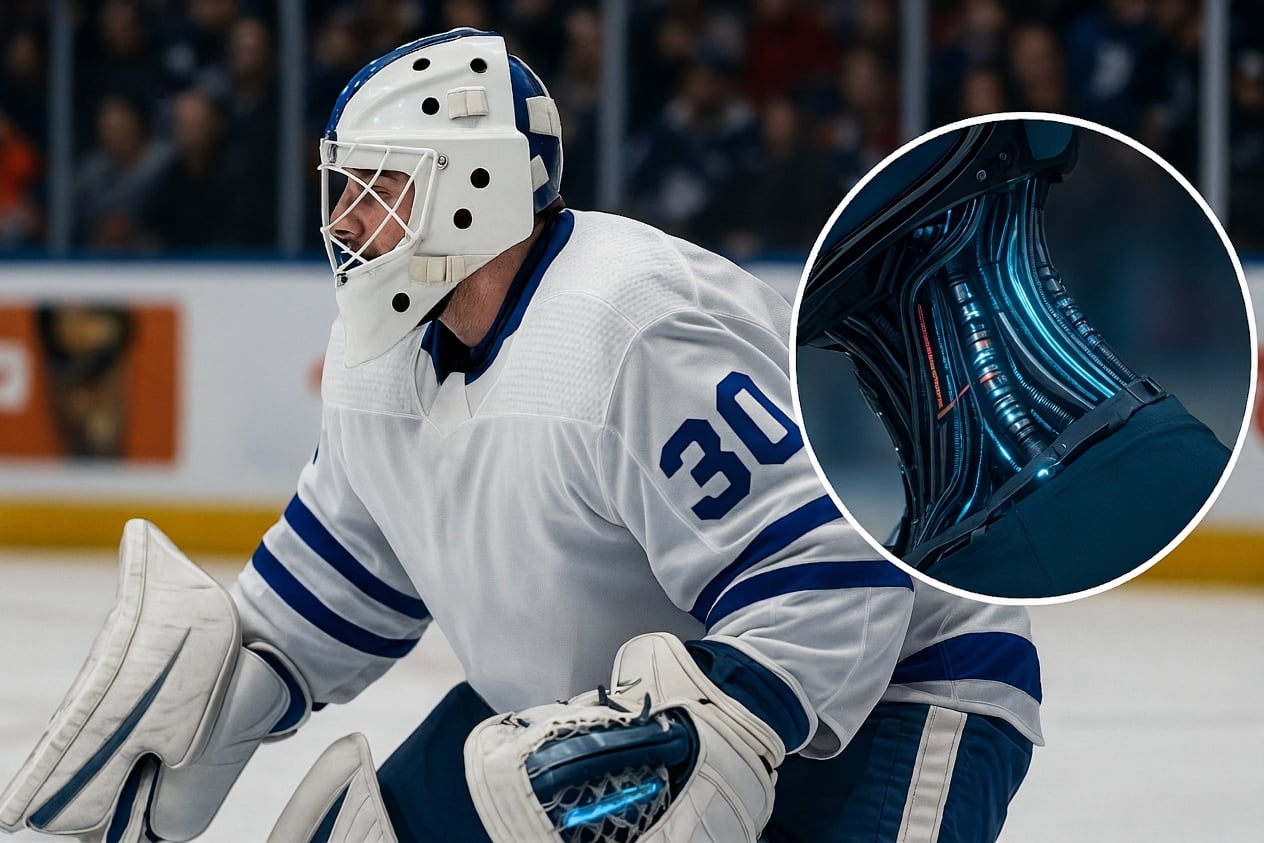
Think of the head like a camera and the neck like a tripod. Traditional neck training is like trying to improve the tripod by strapping extra supports to each of its three legs. It can now hold a heavier camera and resist more force. But have you actually made it better at keeping the image steady when the ground underneath it starts moving?
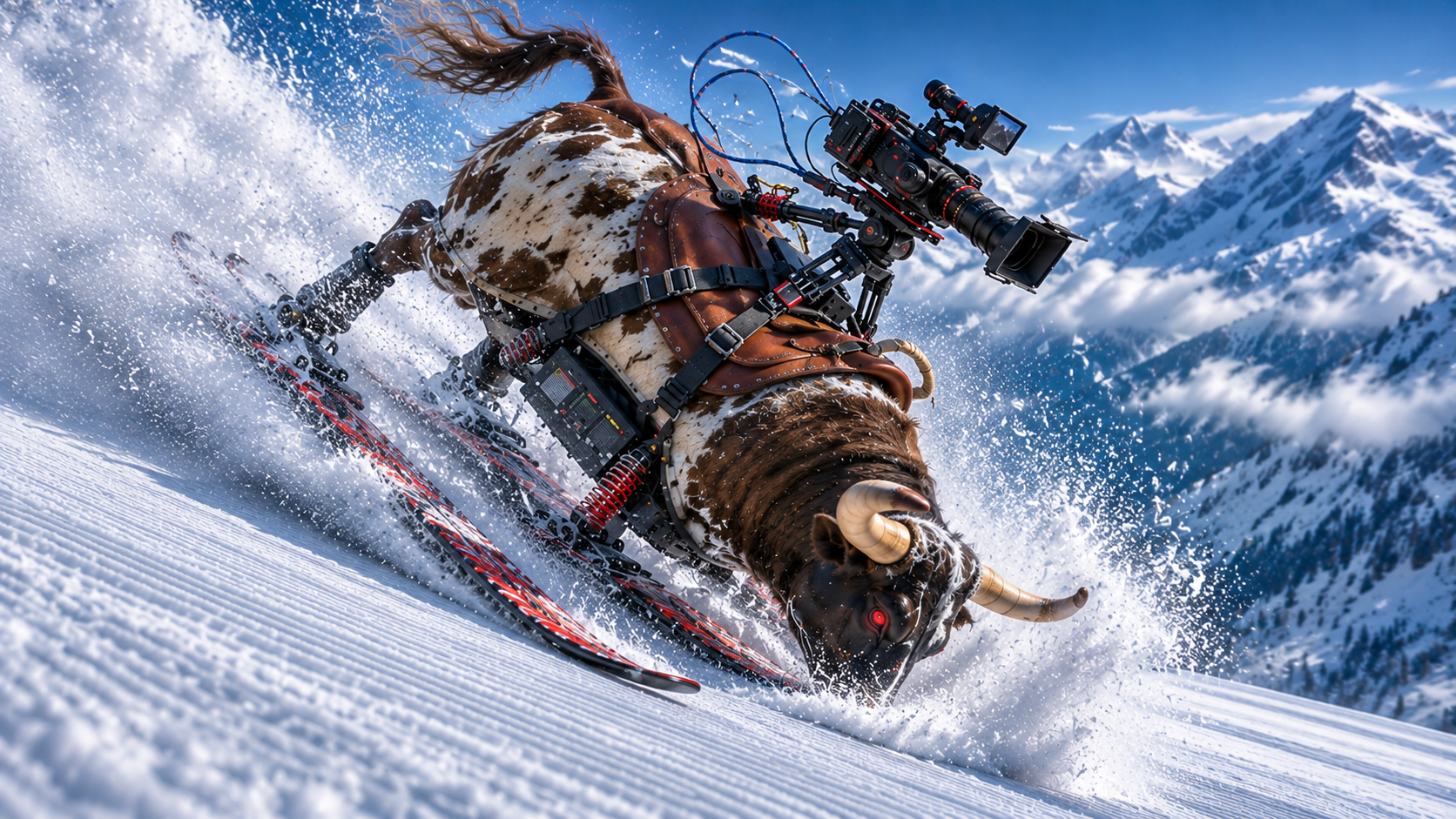
Ski racing is less about supporting a heavier camera on stable ground and more about keeping that camera steady while riding a mechanical bull down the side of a mountain.
The platform underneath the athlete is accelerating, rotating, vibrating and constantly changing direction, yet the head still needs to remain controlled enough to accurately interpret what is happening ahead.
In that environment, strength alone only gets you so far. A high-performance system also needs accurate information about what is happening. Imagine that each tripod leg now contains incredibly precise sensors that measure its length, angle and movement down to the millimeter, in real time. Suddenly, the system has a much clearer picture of the position and movement of the platform beneath the camera.
That is where the analogy starts to resemble the human balance system. The camera represents vision, providing information about the world around you. The vestibular system is like a highly sensitive bubble level built into the camera, providing information about head movement and orientation relative to gravity. Neck proprioception is like the sensors in the tripod legs, telling the nervous system precisely where the head is positioned and how it is moving relative to the rest of the body.
But knowing what is happening is only half the job. The system must also respond quickly enough to matter.
This is where our tripod needs to behave even less like a rigid support and more like the suspension system on a high-performance race car. Great suspension isn’t simply strong. It is responsive, continually adapting to changing terrain, absorbing forces and keeping the chassis controlled while everything underneath it is moving.
The neck works in much the same way. The nervous system continuously integrates visual, vestibular and cervical proprioceptive information to generate fast, coordinated muscular responses that help maintain head control. The accuracy of that information, the speed of the response and the precision of those adjustments are all important components of dynamic stability.
That is the real shift in thinking.
Traditional training asks, “How strong are the tripod legs?”
High-performance neck training asks a much bigger question:
“How accurately can the system sense what is happening, and how quickly can it respond to keep the camera stable?”
Strength still matters. But for a ski racer moving at speed over constantly changing terrain, the neck must do more than resist force. It must accurately and rapidly: sense, integrate and respond as the world underneath it changes.
Why This Matters in Alpine Racing
Ski racing is, in many ways, a continuous negotiation with gravity, speed and terrain. The athlete must manage forces coming through the skis while controlling the trunk, maintaining head orientation and processing visual information about what lies ahead.
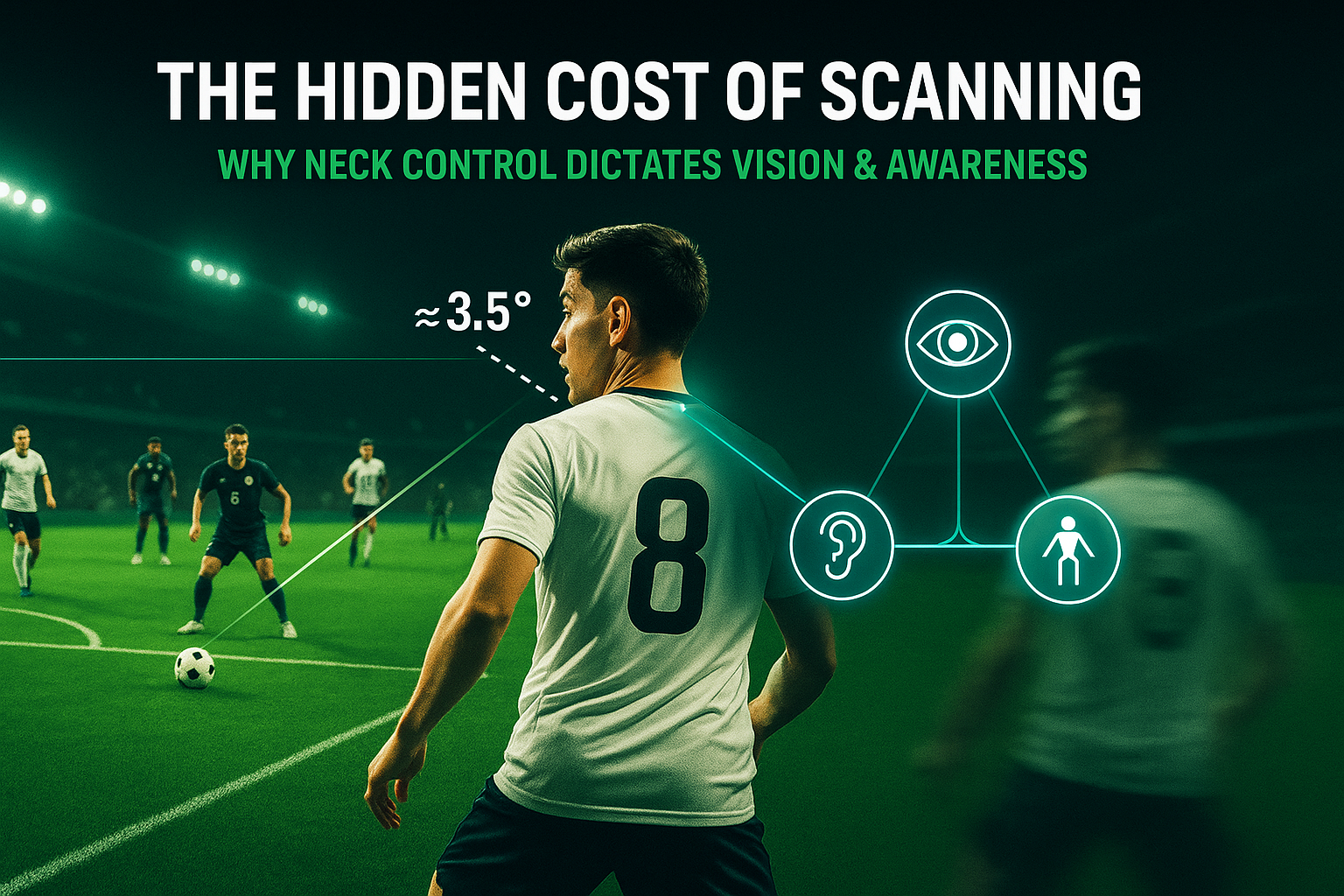
The brain is continuously integrating information to answer three related questions:
Where is my head relative to gravity?
Where is my head relative to the rest of my body?
And where is my head relative to the world around me?
Standing quietly on solid ground is one version of that problem. Answering those questions while accelerating down an icy racecourse is something else entirely.
A ski racer may be able to see the line perfectly. But seeing the line and organizing the body to ski the line are not the same thing.
The athlete doesn’t consciously calculate all these relationships. The nervous system must integrate that information rapidly and automatically while the body underneath the head is moving.
That makes the specificity of neck training worth examining.
The Problem With Training Only the Tripod
Traditional neck exercises generally isolate one direction at a time: flexion, extension or side bending. But a ski racer doesn’t experience these forces neatly separated from one another. Sport blends movement across multiple planes simultaneously, often at high speed.
The qualities we develop in training should reflect the problems the athlete needs to solve in competition.
So how do we train the neck to respond accurately, at speed, in multiple directions, while maintaining head control?
From a Stronger Tripod to a High-Performance Stabilization System
That is the rationale behind TopSpin360.
Rather than asking the athlete to push against resistance in one isolated and predictable direction, TopSpin360 uses rotating resistance to challenge the neck dynamically across multiple planes.
The athlete’s objective is to maintain control of the head while managing that changing resistance. As proficiency improves, rotational velocity increases, requiring faster and more coordinated multi-planar neuromuscular responses.
This is where rate of force development (RFD), how quickly force can be generated, becomes particularly relevant. Having the capacity to generate force is important, but in sport, an athlete often has only fractions of a second to use it.
Importantly, this training doesn’t need to become another lengthy addition to an already demanding performance program. TopSpin360 can be incorporated into existing strength and conditioning routines in just a few minutes per athlete. With objective measures of multi-planar dynamic neck performance in RFD, coaches can establish baselines, track progress over time and make more informed decisions about where the athlete is.
The goal is not simply to build a stronger neck. It is to develop a more responsive stabilization system. One that is better prepared for the rapid, multi-directional demands of Alpine racing.
What Does the Research Tell Us?
The research around neck training is evolving.
Studies have demonstrated that cervical proprioception interacts closely with visual and vestibular systems involved in postural control and spatial orientation. Counterintuitively, there is evidence that traditional neck training may be detrimental to this close interaction by worsening a key measure of head positional awareness Joint Position Error (JPE).1 Research has also shown that neck injury and concussion can disrupt components of cervical sensorimotor function, which helps explain why some athletes can feel “off” even after more obvious symptoms have improved.2
On the flip side, there is evidence that a neck training program that includes TopSpin360 not only improves static and dynamic neck strength, but also improves measures of balance.3
So the deeper question becomes:
How do we train the neck to improve its effectiveness at controlling dynamically changing forces across multiple planes, not only for the potential to mitigate injury risk but also to enhance performance?
For Alpine racing, that is a question worth asking.
The Performance Opportunity
Ski racers would never expect their legs to reach elite performance simply by skiing more.
We deliberately train lower-body strength, power, rate of force development, coordination and movement capacity away from the hill because we understand the demands placed on those systems during competition.
Yet the neck is often expected to perform at an elite level with little or no specific preparation.
There may be meaningful performance capacity being left on the table.
For high-performance programs searching for the next competitive edge, this presents an interesting opportunity: to begin treating neck performance as a measurable component of athletic preparation, rather than an afterthought. Not simply asking whether an athlete has a strong neck, but evaluating how that athlete develops and controls force dynamically, and how those qualities change in response to the training program.
The answer is not to add another lengthy block to an already crowded training schedule. It is to become more intentional about what the neck is being prepared to do.
For Alpine racers, that means moving beyond the idea of simply making the tripod stronger and beginning to train the high-performance stabilization system itself.
Because on race day, the neck’s job is not to hold a camera steady on solid ground.
It is to keep the picture steady while the mountain does everything it can to shake it loose!
The Science Behind the Idea
Dynamic multi-planar neck training is built around several areas of established and emerging research:
- Cervical proprioception contributes to awareness of head position relative to the body and interacts with visual and vestibular information involved in balance and spatial orientation.
- Static neck strength is only one component of cervical performance; dynamic characteristics such as rate of force development and response to perturbation are increasingly being investigated.
- Neck injury and concussion can affect cervical sensorimotor function, reinforcing the importance of assessing and restoring more than strength alone.
- Research on dynamic rotational neck training has demonstrated measurable improvements in neck-training performance, multi-planar strength and rate of force development.
- Emerging research on multimodal cervical training has also reported improvements in balance control, suggesting an important area for further investigation.
If we know that ski racing demands rapid, coordinated neck responses to forces coming from multiple directions, why are we still training the neck as though those forces arrive slowly, predictably, and one direction at a time??
Add Another Edge to Your Training
Learn how dynamic multi-planar neuromuscular neck training with TopSpin360 can be integrated into an existing high-performance program.
Selected Peer-Reviewed Research
- Kramer et al. (2013). Training effects of combined resistance and proprioceptive neck muscle exercising. — A randomized pilot study finding that conventional resistance training was associated with deterioration in one measure of dynamic head-positioning accuracy, while combined proprioceptive and resistance training maintained performance on that measure and produced greater muscle hypertrophy.
- Hiyama (2022). Proprioceptive Cervicogenic Dizziness: A Narrative Review of Pathogenesis, Diagnosis, and Treatment (2022). — Reviews the interaction between cervical proprioceptive information and the visual and vestibular systems.
- Thompson & Lattimer (2025). A Pilot Study on the Effects of Multimodal Cervical Exercise Training on Clinical Concussion Risk Factors in Female Athletes. — Reported improvements in cervical strength, endurance and aspects of balance control following a combined exercise program incorporating TopSpin360 training.