In Part 1, we looked at how elite players “scan” the field far more often than average players — upgrading their awareness like switching from a 60Hz TV to a 240Hz one. That higher refresh rate is what lets them play the game in sharper definition, always seeming to know where the ball, defenders, and teammates are before anyone else does.
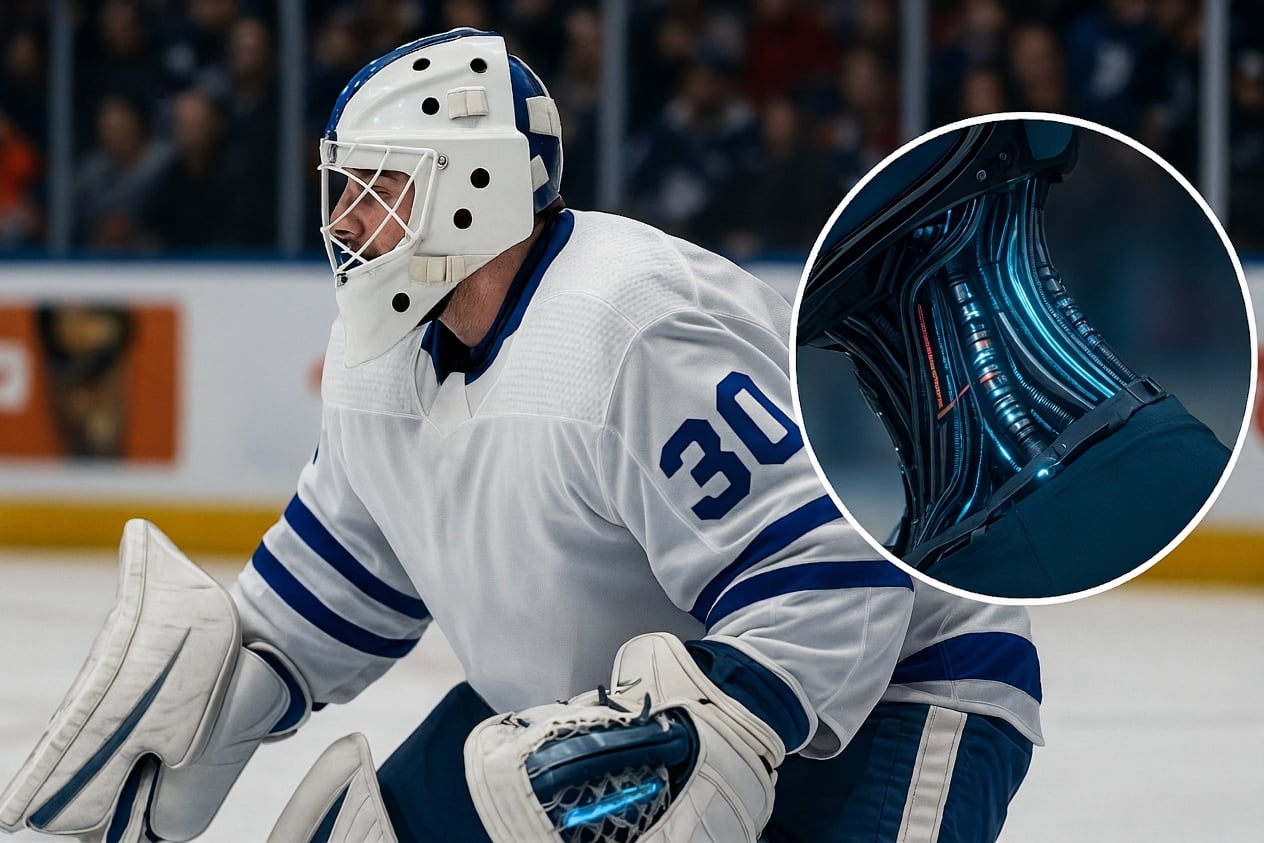
But here’s the catch: nothing in sport comes free. For a TV, the cost of higher refresh rate is bandwidth. For an athlete, the cost of scanning more often is physical — and that cost is paid by the neck.
The Hidden Cost: Repositioning Accuracy
Every head turn is more than a glance. It’s a recalibration. The body has to answer two questions instantly:
- Where is my head in space?
- How does the rest of my body align with it?
This is where proprioception comes in — your body’s sense of position. The neck is packed with sensors that constantly feed this information to the brain. When the head moves quickly, those sensors must reset almost immediately.
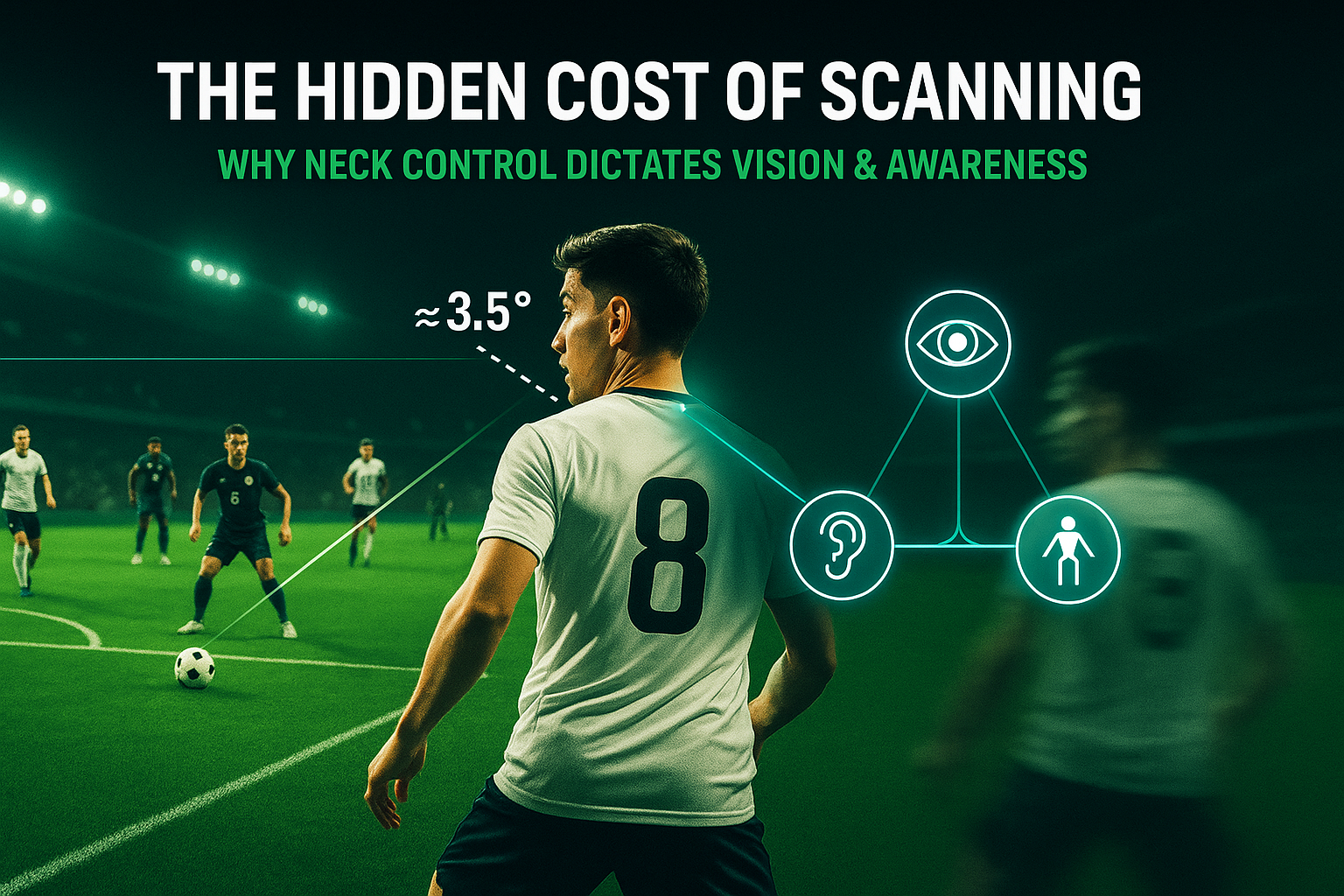
Even in healthy athletes, the average joint position error in the neck is about 3.5 degrees. That might sound small, but extended down the body it can mean the difference between:
- receiving a long pass cleanly with the inside of the foot, or
- missing it altogether.
That’s the hidden cost of scanning without precise control.
The Trade-Off Every Athlete Faces
Faced with this cost, athletes make subconscious trade-offs:
- Scan more often: gain more information but risk losing accuracy when executing.
- Scan less often: maintain orientation but sacrifice awareness.
This is why less experienced players often hesitate, freeze, or make poor decisions under pressure.
Elite players, however, don’t face this trade-off as sharply. They’ve developed the neuromuscular control to reposition their heads with accuracy after every scan. Their proprioceptive systems reset faster, their awareness stays sharp, and they can scan more often without error.
Why the Neck Matters More Than We Think
We often credit elite vision to the eyes — eye-tracking drills, visual acuity tests, reaction training. But vision is only as good as the platform it sits on. If the neck can’t accurately reposition the head, even the sharpest eyes deliver distorted or delayed information.
Scanning, then, is really the integration of three systems:
- Vision (what the eyes capture)
- Vestibular system (balance and motion sensing in the inner ear)
- Cervical proprioception (neck sensors telling the brain where the head is)
The neck is the router that synchronizes them. If that router lags, the entire system slows down.
The 240Hz Player
Think back to that refresh rate analogy. A 240Hz screen isn’t just faster — it processes more data without blurring. Similarly, an elite player with superior neck control scans more often, integrates the information smoothly, and still executes with precision.
That’s why they always appear to have more time on the ball. It isn’t magic. It’s a richer, more reliable data stream — powered by the neck.
Training Implications
This is why simply telling athletes to “look around more” doesn’t work. Without the neuromuscular base, more scans just create noise and errors.
To build true scanning ability, training has to target:
- Neck repositioning accuracy
- Dynamic, multi-planar control
- Integration of vision, vestibular, and proprioceptive systems
With that foundation, scanning becomes natural, not forced. Athletes can refresh awareness more often without paying the price in execution.
Final Thought
The difference between average and elite is rarely about raw skill alone. It’s often about who can handle the hidden costs.
Average players avoid scanning to minimize error. Elite players scan more because their neck control allows them to.
So the next time you watch a midfielder who always seems a step ahead, remember: it’s not just their eyes. It’s the precision of the system guiding those eyes.
It all starts with the neck.