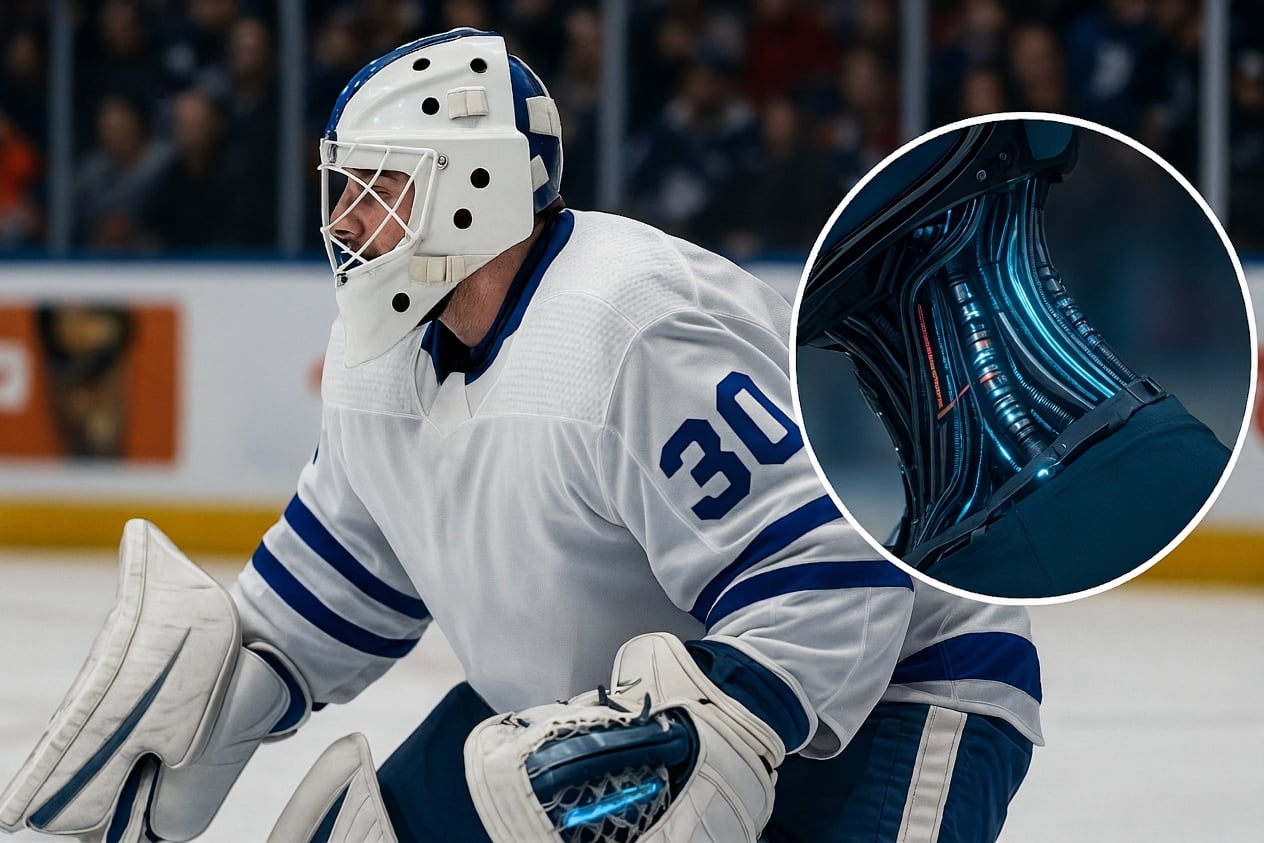
Game 1 of the Maple Leafs–Panthers playoff series gave fans a heart-stopping moment…and not in the good way.
After taking an elbow to the head, goaltender Anthony Stolarz was pulled from the game and later seen vomiting on the Leafs bench; a red-flag symptom of a concussion. Some speculated he may have been concussed earlier in the game, after a shot deflected off his helmet. But here’s why the elbow is the more likely culprit, and why what happens next in his rehab will determine whether he returns as the same goalie.
It’s Not Just About the Hit, It’s About the Vector
The elbow to the side of Stolarz’s head introduced a dangerous combination of side flexion and rotation. This biomechanical cocktail is known to be especially damaging to the head and neck complex. That kind of motion doesn’t just affect the brain; it also strains the muscles, ligaments, and joints of the neck.
And here’s where it gets critical.
Unless this neck injury is specifically addressed, Stolarz will be 3 to 6 times more likely to suffer another concussion. Worse, even after standard recovery protocols, he could experience subtle but devastating deficits in balance, reaction time, and hand-eye coordination. These are all mission-critical for a high-performance goaltender.
The Neck Is the Internet Connection to the Body
Let me explain.
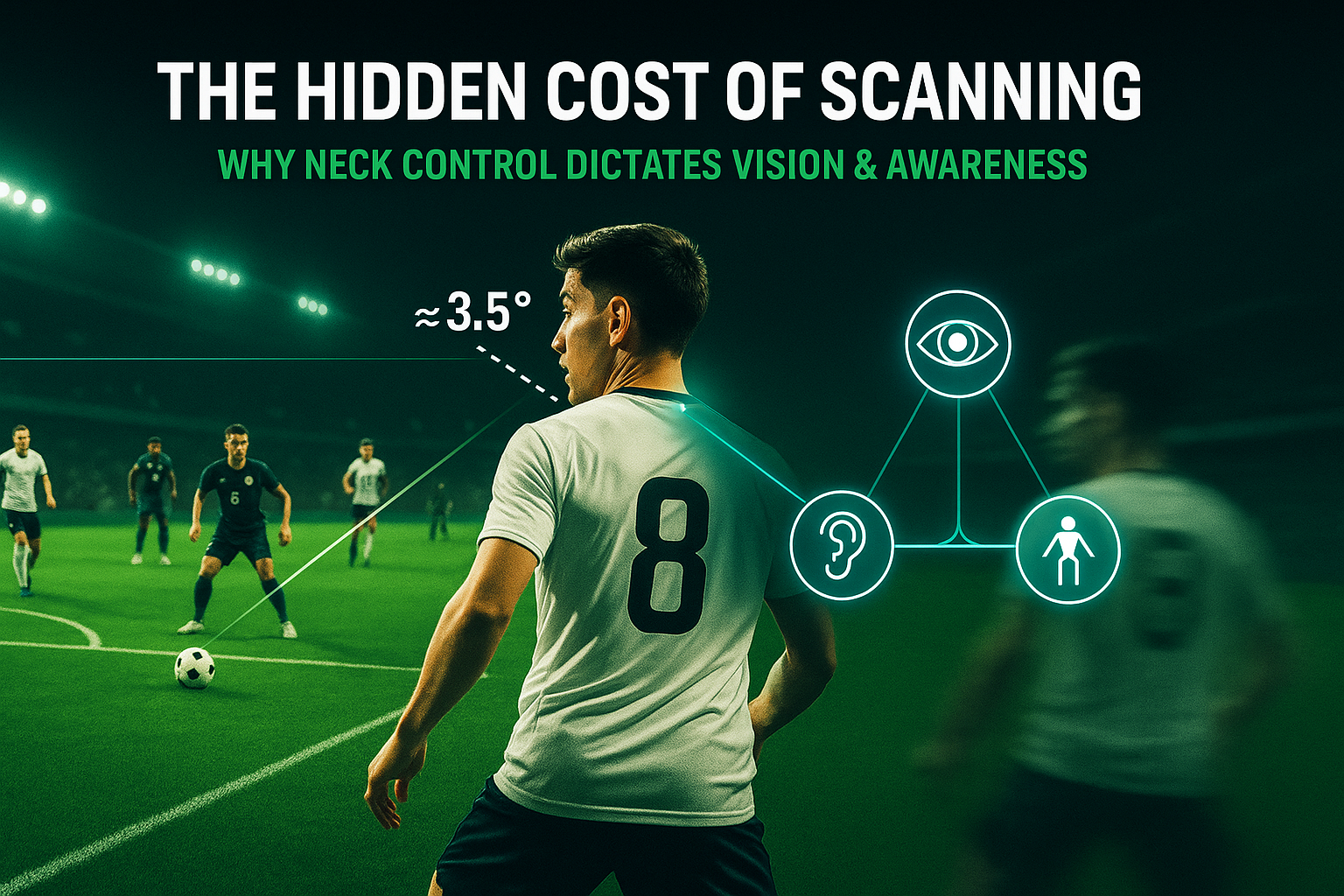
Every split-second save in the NHL starts with the eyes. The puck is tracked visually and downloaded to the brain where it calculates its trajectory in real time and the brain sends out the high-definition athletic response to the body. But that information doesn’t magically teleport to the body and hands, that high-definition athletic signal gets uploaded to action through the neck.
Think of the neck as the internet connection between perception and action. In elite athletes, this “connection” needs to be running on fiber-optic 5G speeds—fast, reliable, and accurate. Damage to the neck is like dropping down to dial-up. You might still be online, but you’re not winning any games.
That’s why restoring multi-planar neuromuscular control of the neck is essential. And it is not just about restoring strength.
Strength Isn’t Enough. Precision Matters.
Too often, rehab focuses solely on regaining neck strength. But strength alone won’t restore the precision signaling needed for elite hand-eye coordination. Stolarz could hit every target in the weight room and still miss the puck by two degrees on the ice.
And in the NHL, two degrees is the difference between a game-saving glove stop and a goal slipping just past the fingertips.
To return to form, athletes like Stolarz need high-speed, multi-directional neck training, the kind that improves not only strength, but also timing, control, and proprioceptive accuracy. It’s not just rehab. It’s recalibration.
What This Means for Stolarz (and for Sport)
If Stolarz receives the right kind of rehabilitation, there’s every reason to believe he can return to form. But without it, the consequences won’t just be another missed game. They’ll show up in the tenths of a second he’s late to react, the inches he’s off his line, the moments when instinct should take over but, doesn’t.
This is a wake-up call not just for the Leafs, but for every high-performance team that still underestimates the role of neck health in concussion recovery and athletic performance.
The science is clear: the neck acts like a high-speed internet connection between the brain and the body. When disrupted, it becomes the bottleneck that throttles elite performance.
Want more insights like this? Follow me for evidence-based strategies in concussion and neck pain recovery, performance science, and neuromuscular training.