If you spend any time watching the very best soccer players in the world, you will notice something almost immediately: they are constantly scanning the field. A quick glance over the shoulder. A turn of the head to check a defender’s position. Another check to see where a teammate is drifting into space.
This scanning is not random. It is one of the most consistent traits seen in elite players. In fact, researchers who have tracked eye and head movements during matches have found that the best midfielders scan two to three times more often than their average counterparts.
This scanning is far from random. In fact, it’s a hallmark of elite players. Arsène Wenger famously said great players have a “head like a radar,” observing that very good players scan six to eight times in 10 seconds before getting the ball, while more ordinary players only scan three to four times (a-champs.comLinkedIn+3beastmodesoccer.com+3beastmodesoccer.com+3). By comparison, elite midfield maestros like Xavi Hernández have been recorded scanning at about 0.8 times per second (over 8 glances in 10 seconds), while Premier League players average roughly 0.6 scans per second (beastmodesoccer.com+2beastmodesoccer.com+2.)
Why does this matter? Because soccer is not just a game of skill, it is a game of information. Every scan provides an update: where the ball is, where the threats are, and where the opportunities are about to open. The more you update, the more likely you are to make the right decision in the split second you actually touch the ball.
Scanning as an Athletic “Refresh Rate”
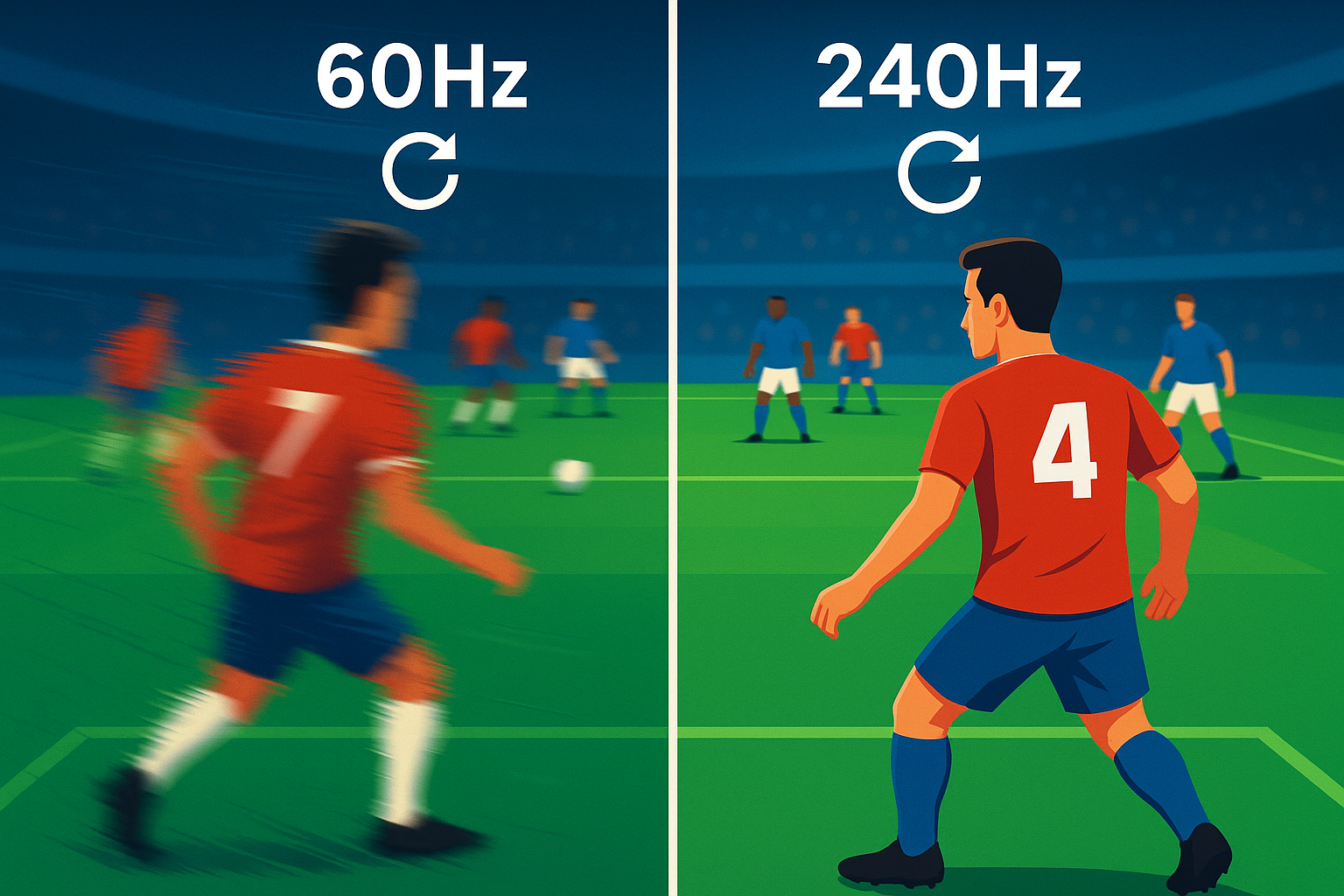
Think of it like a television refresh rate. A standard HD TV at 60Hz shows you the game clearly enough. You see the picture, follow the play, and enjoy the action. But switch to 240Hz, and the entire experience changes. The motion is smoother, sharper, more detailed. You can catch every flick of the ball, every change of direction, every tiny adjustment in body position.
That is what elite athletes are doing with their eyes and heads. They are running at a higher refresh rate. A 240Hz athlete gathers information more often, which means they always have the latest update of what is happening on the field.
And when the game is moving at high speed, “having the latest update” is everything.
Why More Scanning Means Better Play
Take a midfielder receiving the ball under pressure. An average player might have scanned once or twice before the pass, and they may know where the nearest defender is. An elite player, however, has scanned half a dozen times. They know where every defender is, where their teammates are moving, and which passing lane will open up before the ball even reaches them.
The difference is night and day:
- The average player takes a touch, then looks up, and loses the ball.
- The elite player takes a touch, already knowing where the ball is going next.
From the outside, it looks like magic. In reality, it is simply better information, gathered more often.
The Simple Solution That Isn’t Simple
At first glance, the solution seems obvious. If scanning makes you better, then just scan more. Problem solved.
Just scan the field more often, and you will be playing your game in higher definition.
But here is where things get complicated. Because nothing in sport comes free.
For a television, the cost of running at 240Hz is higher bandwidth. For an athlete, the cost of scanning more often is physical. Every rapid head turn is not just a glance, it is a neuromuscular event. The head has to move, stop, and reset. The neck and balance systems have to work together to keep the body oriented. The brain has to stitch those movements into a coherent sense of where the player is in space.
If any part of that system lags, the benefit of scanning more often disappears. Instead of sharper awareness, you get noise and confusion.
Why Some Players Scan Less
This explains why not every player simply scans more. In fact, less experienced or less physically capable players often scan less than they should, even after coaches encourage them to “look around more.”
Their brains are making a trade-off:
- Scan more often: Gain more information, but risk losing orientation.
- Scan less often: Maintain orientation, but sacrifice field awareness.
Neither option is ideal. But for the player with limited neuromuscular control, scanning less feels safer.
The Elite Advantage
Elite players, on the other hand, do not face this same trade-off as starkly. They have developed the ability to scan more frequently without losing orientation. Their necks and proprioceptive systems reset faster. Their brains integrate the information more smoothly.
The result is a higher refresh rate — more information, more awareness, and ultimately, better performance.
This is why watching a world-class midfielder can feel like watching someone play with more time and space than anyone else on the field. They are not actually faster. They are not even necessarily more skilled in raw technical ability. They are simply better informed.
Setting Up the Next Piece
So scanning is not just about looking around more. It is about developing the physical and neurological foundation to scan more often without losing orientation.
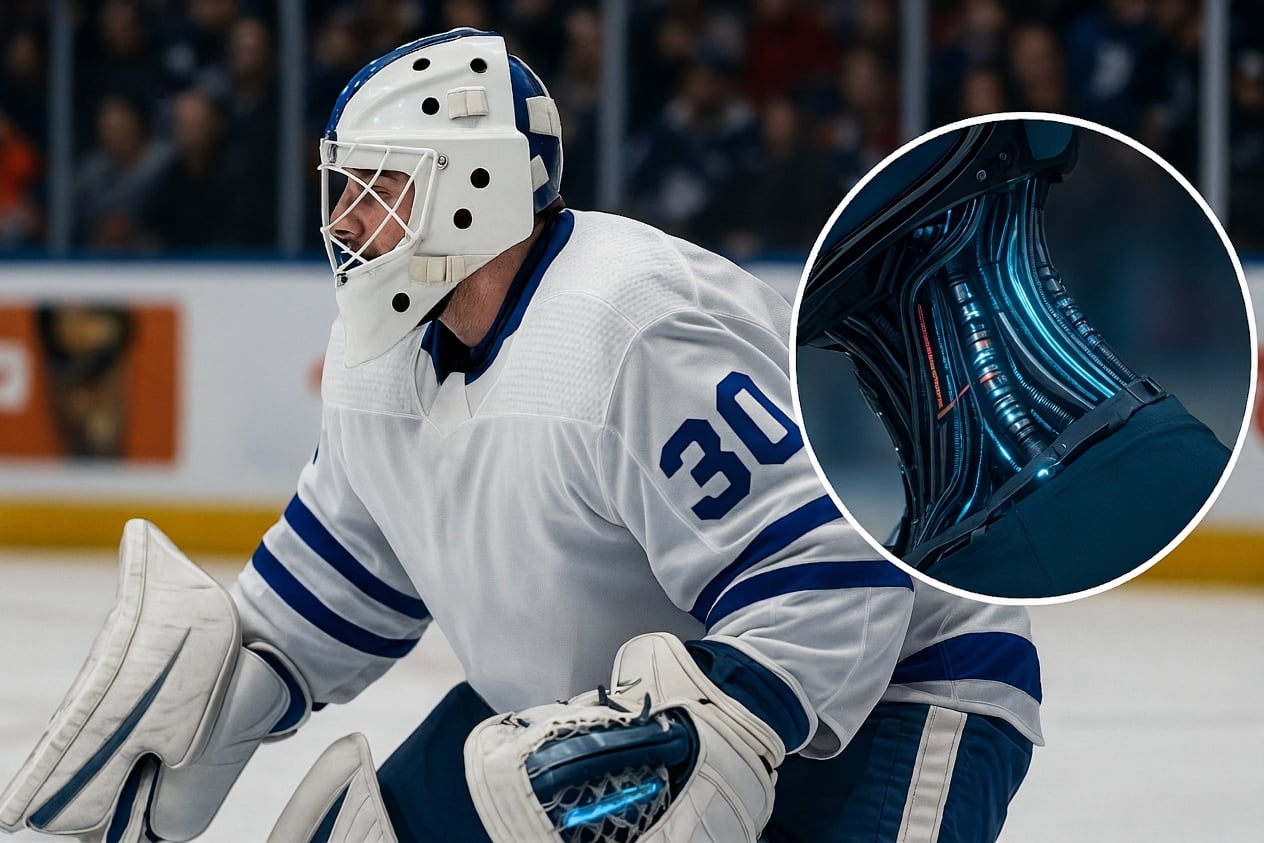
That foundation begins in an overlooked place: the neck.
Because every time the head moves, the neck’s ability to reposition accurately determines whether the brain processes a clear, reliable picture of the field, or a distorted one.
👉 And that is where we will pick up in Part 2: the hidden cost of scanning, the role of joint position error, and why the neck may be the real difference-maker between average and elite.