
You Train for the Hills. Do You Train Your Neck?
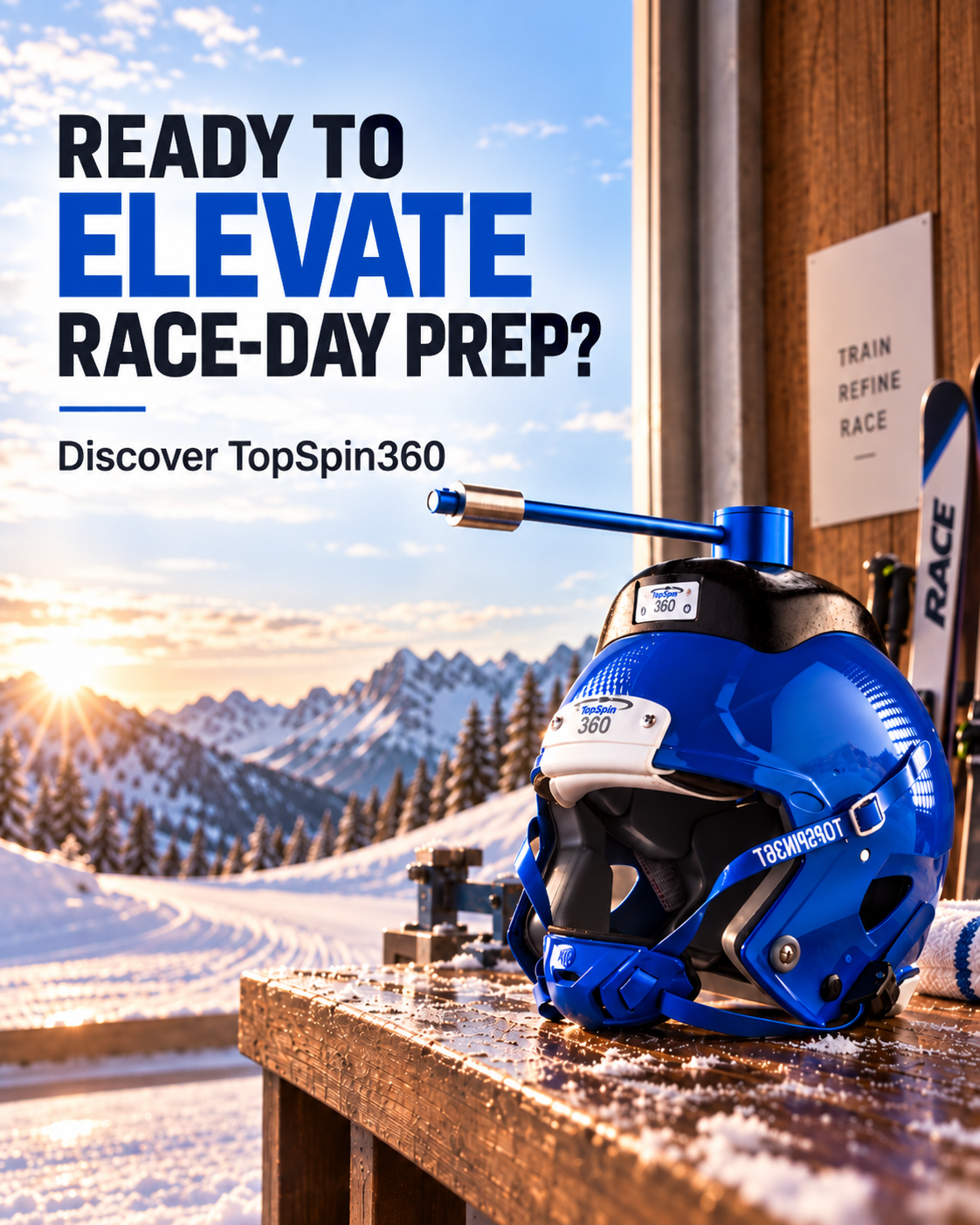
Dryland neck training for ski racers. See it in a free 20-minute demo


See it in 40 seconds
Watch two full training sets in 40 seconds.
Why it matters in skiing
Head Control. Through a compression or a rut mid-turn, the skis and legs change direction abruptly. The neck keeps the head controlled while the body underneath accelerates, rotates and reacts.
Visual Reference. “As you’re going down, you’ve got to keep your eye line and horizon to know exactly where your body is in relationship to gravity.” Dr. Theo Versteegh
Changing Forces. Band and partner work trains one direction at a time, like holding a camera steady on a tripod. A racer has to hold it steady while the ground moves.
How Ski Teams Use It
Connect the App. Connect the TopSpin360 to the TopSpin360 app on your mobile device.
Start Training. The athlete generates the force and spins the weighted arm. The app shows live training data displaying the athlete’s rate of force development (RFD). The app then saves each training session and tracks RFD over time.
Time. Two minutes per athlete, three times a week
Progression. As the athlete improves, rotational speed increases, improving the RFD achieved.
Coaching Support. Our team shows coaches and athletes how to use the equipment.
Ontario’s women’s provincial ski team
“I first came across TopSpin360 when I was coaching the Ontario women’s provincial team. We had a group of athletes returning from serious injuries, and I was looking for every bit of support I could give them. TopSpin360 became one piece of that broader approach.”
“What stuck with me was that the athletes noticed a difference in how their helmets felt, and it made me think differently about a part of the body we rarely discuss in ski racing.”
— Katie Twible, former coach, Ontario women’s provincial ski team
Performance and injury mitigation
“The objective is not simply to build a stronger neck; it is to build a better stabilization system. One that can respond quickly and efficiently when the forces are multi-directional, unpredictable and constantly changing.”
Dr. Theo Versteegh, physiotherapist, inventor and co-founder of TopSpin360
Neck Strength Linked to Lower Injury Risk
A 2014 study of more than 6,700 high school athletes found that greater neck strength was associated with lower odds of head injury. Read the study
TopSpin360 Training Improved Dynamic Neck Strength
A published 14-week pilot study using TopSpin360 found improvements in dynamic neck strength, including rate of force development. Read the study
Frequently Asked Questions
Is this used on snow or during dryland training?
Dryland only. TopSpin360 is off-snow training equipment. It is not worn while skiing and does not replace a ski helmet.
Can one unit serve multiple athletes?
Yes. One unit can serve multiple athletes. TopSpin360 comes in different sizes. Contact us to see what size fits you or your athletes best.
How much training time does a team need?
Sessions of about two minutes, two or three times a week, once coaches and athletes have been shown how to use the equipment.
What ages is it appropriate for?
All ages, as long as the athlete can support the weight of the helmet on their head. The resistance is self-generated, so the weight can only spin as fast as the athlete can control it.
What should someone with ongoing symptoms do first?
Symptoms after a head or neck injury call for a proper clinical assessment before any training. TopSpin360 is performance training equipment, not a treatment.
Racers and parents
Think your club should look at this? Send this page to your coach, or ask us about individual use.
Clinics and recovery after injury
Looking for an assessment after an injury, or run a clinic? Neck Revolution is the right place to start.
Go to Neck Revolution